
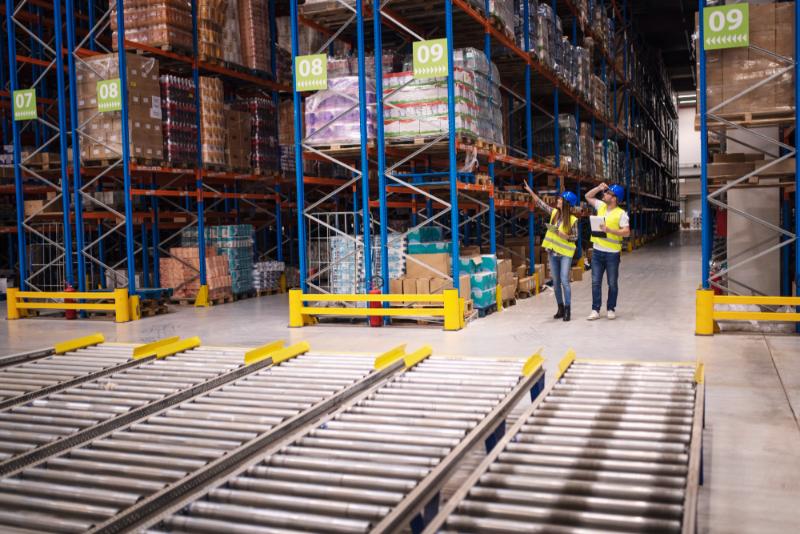
Warehouse Conveyor Systems
Enquire Today For A Free No Obligation Quote
Here at Warehouse Conveyor Systems, we specialise in material handling systems designed to move goods efficiently within warehouse and distribution facilities.
Warehouse conveyor solutions use powered belts, rollers, chains, and automated controls to transport products between storage areas, sorting zones, packing stations, and dispatch points.
Since warehouses process high volumes of goods daily, warehouse conveyor systems improve productivity by reducing manual handling and streamlining workflow.
As these systems provide continuous product movement, warehouse conveyor systems support efficient logistics and supply chain operations.
Request a tailored quote now for durable and efficient conveyor installations.
What Are Warehouse Conveyor Systems?
Warehouse conveyor systems are mechanical transport systems used to move products automatically or semi-automatically within warehouse facilities.
Industrial warehouse conveyor systems often include belt conveyors, roller conveyors, pallet conveyors, sensors, and control systems that manage product movement.
Since warehouses require fast and organised product handling, warehouse conveyor systems help maintain consistent product flow between operational zones.
As conveyor systems reduce reliance on forklifts and manual handling, warehouse conveyor systems improve operational efficiency and safety.
What Types Of Warehouse Conveyor Systems Are Available?
Warehouse conveyor system installation includes several conveyor technologies designed for different warehouse operations.
Belt conveyor systems transport cartons, parcels, and lightweight products using continuous belts.
Roller conveyor systems move boxes and packages using powered or gravity rollers.
Chain conveyor systems transport heavy goods or palletised loads across warehouse floors.
Overhead conveyor systems move items above the workspace to maximise available floor space.
Pallet conveyor systems transport palletised goods through warehouse storage and dispatch areas.
Since warehouses handle products of different sizes and weights, warehouse conveyor systems are designed to match specific operational needs.
What Are The Benefits Of Warehouse Conveyor Systems?
The primary benefit of warehouse conveyor systems is improving the efficiency of internal product movement within warehouse environments.
Key benefits include:
- Improves operational efficiency in warehouse facilities
- Reduces manual handling and labour requirements
- Increases product movement speed in logistics operations
- Enhances workplace safety by reducing forklift traffic
- Supports automated warehouse workflows
Since conveyor automation reduces operational delays and human error, warehouse conveyor systems help maintain reliable and efficient warehouse operations.
How Much Do Warehouse Conveyor Systems Cost?
The cost of warehouse conveyor systems ranges from £10,000 to £250,000+.
The cost depends on system size, design complexity, and automation level.
Small warehouse conveyor systems may start from approximately £10,000 to £30,000 for basic belt or roller conveyor installations.
Medium warehouse conveyor projects commonly range between £30,000 and £120,000 depending on conveyor length and control features.
Large automated warehouse conveyor systems may exceed £120,000 to £250,000+ where integrated automation and sorting technologies are required.
Since pricing depends on conveyor layout, system configuration, and software integration, tailored quotations are typically provided for warehouse conveyor systems.
What Industries Use Warehouse Conveyor Systems?
Warehouse conveyor systems are widely used across several logistics and industrial sectors.
Logistics and distribution centres use conveyor systems to move goods between storage and shipping areas.
E-commerce fulfilment centres rely on conveyor systems to process orders quickly and efficiently.
Manufacturing warehouses use conveyors to transport products between production and storage zones.
Retail distribution facilities use warehouse conveyors to manage large volumes of inventory.
Since efficient material movement is essential for modern supply chains, warehouse conveyor systems support high-volume logistics operations.
How Long Does Warehouse Conveyor System Installation Take?
Warehouse conveyor system installation timelines depend on system size, warehouse layout, and integration complexity.
Small warehouse conveyor installations may take 2 to 4 weeks.
Medium warehouse conveyor system projects typically require 4 to 8 weeks including installation and testing.
Large automated warehouse conveyor systems may take 2 to 4 months or longer depending on system design and facility integration requirements.
Since system planning and installation require careful coordination, warehouse conveyor systems are installed through structured project phases.
How Do Warehouse Conveyor Systems Work?
Warehouse conveyor systems transport goods using powered belts, rollers, or chains that move products along designated pathways.
Sensors and scanning systems detect items and guide them to specific warehouse zones.
Since automated product flow improves operational efficiency, warehouse conveyor systems streamline logistics processes.
As integrated control systems manage product routing, warehouses benefit from reliable and organised material handling.
Can Warehouse Conveyor Systems Integrate With Warehouse Software?
Warehouse conveyor systems can integrate with warehouse management systems (WMS) and warehouse control systems (WCS).
Software integration allows real-time product tracking and automated routing within warehouse operations.
Since digital integration improves inventory visibility and logistics management, warehouse conveyor systems enhance warehouse control.
As integrated automation systems coordinate equipment and software, warehouses achieve improved operational efficiency.
Are Warehouse Conveyor Systems Suitable For Heavy Loads?
Warehouse conveyor systems can be designed to transport heavy goods and palletised loads.
Heavy-duty warehouse conveyors use reinforced rollers, chains, or frames to support large loads.
Since warehouses often handle heavy inventory and palletised goods, warehouse conveyor systems can be customised for load capacity.
As strong conveyor structures distribute weight effectively, systems maintain reliable performance.
What Maintenance Do Warehouse Conveyor Systems Require?
Warehouse conveyor systems require routine inspection and preventative maintenance.
Conveyor system maintenance typically includes checking motors, belts, rollers, sensors, and control components.
Since continuous operation places stress on mechanical parts, warehouse conveyor systems require scheduled servicing.
As preventative maintenance reduces downtime and equipment failure, conveyor systems remain efficient and dependable.
Get a Free Quote for Warehouse Conveyor Systems
Warehouse conveyor systems provide efficient solutions for transporting goods within warehouses and distribution centres.
Professional warehouse conveyor installation integrates mechanical conveyors, sensors, and control technology to streamline material handling.
Since automated product movement improves efficiency and reduces manual labour, warehouse conveyor systems support modern warehouse logistics and supply chain operations.
Enquire today for warehouse conveyor systems designed to streamline product movement.
Find More Info
Make sure you contact us today for a number of great warehouse conveyor systems services.
For more information on Warehouse Conveyor Systems in Barking IG11 8, fill in the contact form below to receive a free quote today.
★★★★★
Warehouse Conveyor Systems provided a well-structured solution tailored to our distribution centre. The installation process was smooth, and the system has improved our daily workflow noticeably. Their team kept us informed at every stage, which made the project easy to manage. I would confidently recommend their services.
Jeric Samson
Greater London
★★★★★
We required a reliable conveyor setup for our expanding warehouse, and Warehouse Conveyor Systems delivered exactly that. The system performs consistently and has helped streamline our operations. Their technical knowledge and practical advice were particularly helpful throughout. A dependable company with strong expertise.
Sophie Harrington
Greater London